Author Guidelines
Journal of Innovative Educational Research (JIER)
The Journal of Innovative Educational Research (JIER) publishes a variety of scholarly articles covering:
- Innovative Teaching & Learning Methods: Research on new approaches such as project-based learning, flipped classrooms, and collaborative methods.
- Curriculum & Reform: Studies on the development, implementation, and evaluation of new curricula and their impact.
- Leadership & Policy: Analysis of the role of leadership in educational innovation and the evaluation of relevant policies.
- Assessment, Evaluation & Measurement: Innovations in assessment tools and methods, including the use of data and technology.
- Teacher Education: Research on teacher training, professional development, and the role of teachers as innovators.
- Inclusive & Equitable Education: Efforts to create equitable learning environments for all students, including strategies for multicultural education and students with special needs.
JIER prioritizes research articles in the field of education from researchers at institutions in Southeast Asia. However, articles from researchers outside Southeast Asia are also highly welcome.
Manuscript Guidelines
Manuscripts must be written in English (either American or British English is acceptable, as long as it is consistent) with a Times New Roman 11 pt font, in two columns, with single spacing, on A4 paper with a 2 cm top-bottom margin and a 2 cm left-right margin. A template for the Journal of Innovative Educational Research (JIER) is available HERE. Manuscripts must be typed using the provided Microsoft Word template and saved in .doc or .docx format.
Manuscripts must strictly adhere to the following rules:
1. Title: The title should be short, precise, and written in English. The title length should not exceed 20 words and must be in Times New Roman 14 pt font.
2. Authors: Authors' names are listed without titles or ranks. Below the name, include the department, faculty, city, country affiliation, and email address. A separate field is provided for the corresponding author with complete contact details. For authors with a single-word name, it must be repeated twice for the first and last names. For authors with more than two words in their name, the last name should consist of a single word, with the rest written as the first name.
3. Abstract: Written in English, the abstract summarizes the article. It must consist of a single paragraph with a maximum of 250 words, using Times New Roman 10 pt font, in a single column, and with single spacing. The abstract must include the problem, research objectives, methods, results, discussion, conclusions, and keywords. The number of keywords should be between five and seven.
4. Introduction: The introduction, written in Times New Roman 11 pt font, must serve as a strong argument for your research. The logical flow begins by establishing the broad research context, explaining the topic's global or national significance. In this section, you must use credible references from the last 10 years (following APA 7 style) to support your claims about the topic's importance. Example: (Ashkanasy et al., 2000). The next crucial part is a critical literature review that identifies and explicitly states the research gap. Here, you must selectively cite key relevant studies from the last decade to demonstrate your thorough understanding of the current literature. Ensure every claim about a study's findings is supported by an accurate citation (e.g., (Bulkani et al., 2023; Maleku et al., 2021)). Based on the identified gap, formulate your specific and measurable research questions and aims. Conclude the introduction by explaining your research's contribution, both theoretical and practical, so the reader understands the value your article adds to the scientific community. By integrating relevant and up-to-date references, you strengthen the validity and relevance of your research in the eyes of reviewers and readers.
5. Methods: The Methods section, written in Times New Roman 11 pt font, must provide a detailed and transparent account of how the research was conducted. The key to this section is clarity, accuracy, and detail, which allows other researchers to replicate your study. You can present this information in a dense single paragraph or, for better clarity, break it down into sub-sections. If using sub-sections, ensure the hierarchy is consistent:
2.1 Second-Level Heading
2.1.1 Third-Level Heading
In this section, you must sequentially describe the research design and its rationale, provide a detailed description of the subjects or participants including the sampling technique, explain the research instruments along with their validity and reliability, outline the systematic data collection procedures (including ethical consent), and detail the data analysis techniques applied. The clarity and detail in this section are crucial for establishing the validity and reproducibility of your research.
6. Results: The Results section, written in Times New Roman 11 pt font, is where you objectively present your research findings without interpretation. The key is to present data in a clear, logical, and concise manner. You can use a combination of text, tables, and figures to present the findings.
6.1 Presenting Data in Text: Use narrative to explain the key findings that are most relevant and significant in answering your research questions. Describe the trends, patterns, or relationships found in the data. However, avoid repeating data already presented in tables or figures; instead, simply refer to them.
6.2 Using Tables and Figures: Use tables to present detailed statistical or structured data. Each table must have a sequential number and a descriptive title placed above it. Below is an example of how a table should be formatted, with the title placed directly above the table itself. Example 1: Standard Table Format
Table 1. Table 1 title
|
Name |
Level 1 |
Level 2 |
|
age |
score |
|
|
Imam |
20 |
97 |
|
Udin |
21 |
99 |
Meanwhile, use figures such as graphs or diagrams for complex visual data. Each figure must also have a sequential number and a clear title, but this should be placed below the figure. To ensure the standard quality required for a journal, figures must have a minimum resolution of 300 dpi (dots per inch) for color images and 600 dpi for black-and-white or line art images. Ensure all text and labels within the figures are easily readable. Example Figure:
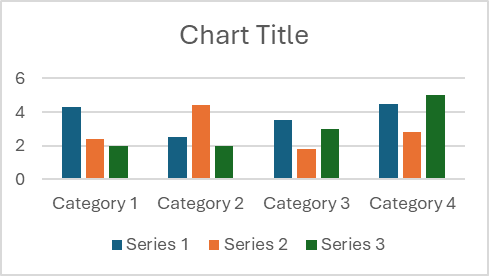
Figure 1. Title figure
6.3 Units: The units used are the International System of Units (see https://www.britannica.com/science/International-System-of-Units).
6.4 Equations: Equations are numbered in parentheses and sequentially numbered. All equation numbers must appear on the right side of the equation and be referred to in the text. An exception is made for equations that appear only once and are not referred to later (e.g., merely showing a formula) which are not numbered. Equations must be created using the Microsoft Word equation editor, not pasted as images.
6.5 Key Points: Report the data as it is, without providing any interpretation or speculation about its meaning. Ensure the presented results are sequential and consistent with the methods you described earlier. The engagement and detail in presenting the data in this section form a strong foundation for the discussion you will undertake in the next section.
7. Discussion: The Discussion section, written in Times New Roman font size 11, is where you interpret and explain the significance of your research findings. This is a crucial part of your paper, where you demonstrate a deep understanding of your topic and your scientific contribution. A good discussion goes beyond simply restating the results; it explains why those results are important. Begin by interpreting your results, explaining what your findings mean and whether they support or contradict your hypotheses. Next, connect your findings to the existing literature by comparing and contrasting them with previous studies. This places your research within a broader scientific context and highlights your unique contribution. You should then outline the theoretical and practical implications of your findings—how your results enhance existing theory and how they can be applied in real-world settings. Acknowledging the limitations of your study demonstrates scientific integrity, and based on these limitations, you should provide suggestions for future research, guiding other researchers to areas that require further exploration. This logical structure ensures your discussion is a compelling argument that provides meaningful contributions to the field.
8. Conclusion: The Conclusion section, written in Times New Roman font size 11, is where you provide a concise and direct answer to your research questions. This section is not a summary of the entire paper but a firm confirmation of your main contributions. It must begin by restating your research aims and directly addressing them based on your findings and discussion. You should then briefly reiterate the main research contribution, whether it's theoretical or practical, and explain how your findings fill the research gap identified in the Introduction. Finally, mention the key implications of your study, focusing on its most significant impacts on theory, practice, or policy in the field. This section must be brief, typically no more than one or two paragraphs, and should not introduce any new data, arguments, or references. By adhering to these guidelines, your conclusion will serve as a powerful and memorable ending to your scientific article.
9. Article Information Form
Acknowledgments. In this sub-section, you should acknowledge individuals or institutions that made a significant contribution to your research but do not meet the criteria for authorship. Be specific about the type of assistance provided, such as financial support from a sponsor, technical help from lab staff, or valuable advice from colleagues.
Authors' Contribution. Clearly state the specific roles of each author in the research, from the initial conception of the idea and data collection to analysis and the writing and revision of the manuscript. This is crucial for ensuring fair and transparent attribution, in line with publication guidelines. All authors must have contributed significantly to the research. Each author's contribution should be categorized according to CRediT - Contributor Roles Taxonomy (https://credit.niso.org/). The roles are: Conceptualization, Data Curation, Formal Analysis, Funding Acquisition, Investigation, Methodology, Project Administration, Resources, Software, Supervision, Validation, Visualization, Writing - original draft, and Writing - review & editing.
Declaration of Conflict of Interest. Honestly declare any financial or non-financial conflicts of interest that could potentially influence your research outcomes or interpretation. If no conflicts exist, you must state it explicitly, for example, "The authors declare no conflict of interest."
Artificial Intelligence Statement. Explain the extent to which artificial intelligence (AI) tools were used in your research or manuscript preparation. Specify the purpose of their use, such as for grammar checks or drafting a section, and confirm that AI was not used for critical processes like data collection or analysis.
Ethical Approval. If your study involved human subjects or animals, include a statement confirming that the research received ethical approval from the appropriate institutional review board. Provide the approval number and the name of the institution. This demonstrates that your research was conducted in compliance with ethical standards.
10. References
FOLLOW THE APA 7th EDITION GUIDELINES STRICTLY (BOTH IN-TEXT AND IN THE LIST OF REFERENCES).
Publication Manual of the American Psychological Association, Seventh Edition
Single Author
Johnson, D. (2022). The impact of blended learning on student engagement. Journal of Educational Technology, 15(3), 45-58. https://doi.org/10.1234/jet.v15i3.987
In-text: Johan (2021) suggested that ...
In-text, inside brackets: ...the learning method has a positive impact (Johnson, 2022)
Two Authors
Dorrian, J., & Wache, D. (2009). Introduction of an online approach to flexible learning for on-campus and distance education students: Lessons learned and ways forward. Nurse Education Today, 29(2), 157-167. https://doi.org/10.1016/j.nedt.2008.08.010
In-text: Dorrian and Wache (2009) suggested that...
In-text, inside brackets: (...the online approach is effective (Dorrian & Wache, 2009))
Three Authors or more
Beckner, C., Blythe, R., Bybee, J., Christiansen, M. H., Croft, W., Ellis, N. C., & Schoenemann, T. (2009). Language is a complex adaptive system: Position paper. Language Learning, 59(1), 1-26. https://doi.org/10.1111/j.1467-9922.2009.00533.x
İn text: Beckner et al. (2009) argued that...
In-text, inside brackets: (...language is a complex system (Beckner et al., 2009)).
Note: Use "et al." to refer to three or more authors.
Citing a Book
Brown, L. S. (2018). Feminist Therapy (2nd ed.). American Psychological Association. https://doi.org/10.1037/0000092-000
Important Additional Rules
1. Citing Multiple Works in One Parenthetical: List citations alphabetically by the authors' last names and separate them with semicolons. Example: (...the findings were consistent with other studies (James & Graham, 2010; Lindo et al., 2008; Smith, 2019)).
2. Publisher Details: In APA 7, you only need to list the publisher's name (you no longer need to include the city and country). Example: American Psychological Association.
3. Direct Quotes: When using a direct quote, you must include the page number(s). Example: (Leskowitz, 2017, p. 324) or (Smith & Bruce, 2018, pp. 25-26).
4. Referring to Tables and Figures: All figures and tables you include in your manuscript must be referred to and explained in the main body of the text. Ensure that figures and tables are numbered sequentially.
5. Minimum 40 references, 80% from the last 10 years
The use of reference management applications such as EndNote, Mendeley, Zotero, and other similar applications is recommended.
All manuscripts must be submitted to the Journal of Innovative Educational Research (JIER) Editorial Office using the OJS 3.5 Online Submission Service at the following URL: https://ieser.org/index.php/JIER/about/submissions, where authors must first register as an Author Role. If you have any problems with the online submission, please contact the Editorial Office at ieserjournal@gmail.com. A cover letter outlining the important findings of the paper and its significance must accompany the manuscript submitted via the online submission interface.
Submission Process
The following types of manuscripts are accepted for publication: Original Research Articles, Reviews, and Case Studies. The author determines the manuscript type based on the content of each manuscript; the editor only proceeds with the manuscript type selected by the author.
Manuscripts should not exceed 6,000 words with a minimum of 40 references, 80% of which must be from the last ten years.
Online Submission Guide: Authors must first register with an Author Role and may be offered a Reviewer Role at https://ieser.org/index.php/JIER/about/submissions. Where forms are marked with an asterisk, authors must fill in the forms in as much detail as possible. Once all form text boxes have been filled, the author clicks the "Register" button to continue the registration process. The author is then directed to the online author submission interface where they must click "Make a submission." In the Start a New Submission section, click "'Create a new submission' to proceed to step one of the five-step submission process." The five steps in the online submission process are as follows:
- Start: Select the appropriate journal section. The author must then use the checkboxes on the submission checklist. The author must type or copy and paste the Cover Letter into the Comments for Editor box.
- Upload Submission: To upload the manuscript to this journal, click "Browse" on the Upload submission file item and select the manuscript document file (.doc/.docx) to be submitted, then click the "Upload" button until the file is successfully uploaded. The cover letter and any other additional files are also uploaded here.
- Enter Metadata: In this step, the metadata details of the authors must be entered, including marking the corresponding author. Authors are highly encouraged to complete their author identity, including adding a correct ORCiD ID. After that, the title and abstract of the manuscript must be uploaded by copying the text and pasting it into the textbox, including the keywords. Other required metadata are language and references.
- Confirmation: In this step, the author must check the uploaded manuscript document. To submit the manuscript to the Journal of Innovative Educational Research (JIER), click the "Complete Submission" button when the document is valid. The corresponding or primary contact author will receive a notification via email. They will be able to track the submission's progress through the editorial process by logging in to the journal website.
Next Steps: This contains additional information for the author, such as whether the author wants to make another submission or return to the author dashboard. After this submission, the submitting author will automatically receive an email confirmation of the submission. The author can therefore track the status of their submission at any time by logging into the online submission interface. Submission monitoring includes the status of the Manuscript Review and the Editorial Process.